The agent-ready
parts data layer
Partsgraph ingests your datasheets, parametrics, CAD and compliance documents into one canonical Parts Graph™ — and serves it to AI agents over MCP, agent-readable pages and shopping feeds. Monitored for accuracy. Measured per agent. No website rewrite.
MCP · STREAMABLE HTTP · ETIM XCHANGE 2.0 · EU DPP READY · WORLDWIDE
claude tools/call parts.search {"din_rail":true,"amps":10,"curve":"C"} → 200 · 41 ms · 12 results
gptbot GET /agents/parts/S1-1993846.md → 200 · 12 ms · text/markdown
copilot tools/call parts.alternates {"mpn":"3RV2011-1JA10"} → 200 · 38 ms · 4 cross-refs
The opportunity
The buying decision moved to the machines. Your catalog didn't.
For a century, winning the spec meant being in the right catalog, the right wholesaler, the right rep's memory. That's still the game — except the specifier is now, increasingly, an AI. And it reads a completely different catalog than your customers do.
0%
of business buyers use AI in their buying process (up from 89%)
Forrester, 2026
+0%
YoY growth in AI-referred traffic — and it converts better
Adobe, 2026
0M
weekly ChatGPT users — agents now sit inside the buying journey
OpenAI, Feb 2026
0%
of searches end with zero clicks — the answer travels, not the buyer
SparkToro, 2026
0M
monthly MCP downloads — the way agents call tools is now standard
MCP SDKs, Mar 2026
The window · a land-grab with a clock on it
2024
The plumbing shipped
MCP launches. Assistants learn to call tools and read live data. The rails for agent commerce are laid.
2025
Buyers moved
94% of business buyers now use AI in their buying process. Digi-Key opens its doors to AI crawlers; Microchip ships its own MCP server. The early movers plant flags.
2026 · now
The gate starts to close
From September, edge networks default-block unverified agents. Assistants are choosing which sources to trust — and citing them by name. Whoever is accurate and reachable now becomes the default answer.
2028
Defaults harden
Agents have their trusted catalogs. The manufacturers they learned to read are the incumbents of the agentic channel. Everyone else is a scrape, a guess, or absent.
Being the source an agent trusts compounds. The first accurate, reachable catalog in a category becomes the default answer — and defaults are sticky. The manufacturers who win the next decade are simply the ones the machines can read first.
The problem
Why the machines can't read you — and why it isn't your fault.
The best manufacturer catalogs on the web are invisible to AI for two structural reasons. Neither is neglect. Both are fixable without touching your website.
0/0M
JavaScript executions observed across 500M AI-crawler fetches — they read raw HTML only
Vercel × MERJ crawler study
0%
machine-readability of product pages — the worst score of any page type on the web
Adobe, 2026
SEP 2026
edge networks begin default-blocking unverified agents. Silence stops being neutral — it becomes a wall.
Cloudflare policy
Reason 01
Agents don't run JavaScript.
Every AI crawler except Google reads raw HTML and stops. Your faceted search, your spec tables loaded on click, your stock widget, your CAD download flow — all rendered in the browser, all invisible. The catalog you paid to build for humans simply isn't in the file the machine reads.
Reason 02
Your edge blocks the machines.
Anti-bot walls do their job a little too well — dropping the exact request shape AI assistants use. Here is what a typical manufacturer site returns to the agents your buyers are asking right now:
GPTBot GET /catalogue/breakers/3RV2011 → 403 FORBIDDEN
ClaudeBot GET /docs/datasheets/3RV2011.pdf → CONNECTION DROPPED
Claude-User GET /catalogue?curve=C&s=10 → BLOCKED BY ROBOTS.TXT
PerplexityBot GET /catalogue/din-rail → 403 FORBIDDEN
any agent partsgraph · tools/call parts.search → 200 OK · CITED · MOCK STOCK
Illustrative — MOCK STOCK is a demo label, not a live availability claim
When the first in-chat checkout was scaled back, analysts put it down to product data the platform could not trust — inventory and pricing that were scraped rather than served. Accuracy is the whole game, and the only accurate source is you. Be the answer, or be absent.
For the people who make the parts
You built the catalog. The machines can't read a line of it.
You've spent years and a fortune getting your product data right — the datasheets, the parametrics, the CAD, the compliance. It's immaculate for a human with a browser. To the AI now doing the shortlisting, most of it may as well not exist.
“What's a good 10 A Type-C MCB for a UK consumer unit?”
Here are options from [reseller] and [marketplace]…
→ your part: not mentioned — its specs weren't readable
→ price quoted: 14 months stale, from a scraper
→ compliance: “I couldn't verify current certification”
“What's a good 10 A Type-C MCB for a UK consumer unit?”
Your MCB-10C-6KA fits — 10 A, Type C, 6 kA, to BS EN 60898.
→ cited to your datasheet, rev-controlled
→ mock: 2,140 in stock · live price · lead time 2 days
→ 2 verified alternates offered if out of stock
Worked example — mock stock, not a live availability claim
Digital / e-commerce director
You own the number that says how much revenue comes through digital. Agent traffic is the fastest-growing slice of it — and the one you currently have no instrument for.
Product data / PIM manager
You already keep the data immaculate for ETIM, BIM and the webshop. This makes that same data answer questions — and turns the compliance work you're forced to do anyway into a channel.
The engineer who specs you
They've stopped starting at your website. They start at an assistant. If it can't cite you accurately, you're not on the shortlist it hands them.
The system
One canonical graph. Every agent surface.
A layer, not a rewrite. Partsgraph reads from the systems you already run and serves alongside the website you already have — nothing on your critical path changes.
Ingest
PDF datasheets, PIM, ERP, site crawl, CAD/BIM. Eval-gated extraction — every field carries a confidence score and a source link.
PG-EXTRACT · CONF ≥ 0.99 → PROMOTE
Canonicalize
Typed parametrics per ETIM class. MPN and variant entity resolution. Cross-reference and alternates graph. One version of the truth.
ETIM 10 · ECLASS 16 · MPN-RESOLVE
Serve
A hosted MCP endpoint, agent-readable pages with structured data, AI shopping feeds and compliance exports — generated, not built.
MCP · JSON-LD · FEEDS · DPP/AAS
Measure
Agent query logs, share-of-answer versus competitors, and continuous golden-set accuracy probes of the major assistants.
EVALS · ATTRIBUTION · WEEKLY REPORT
The surfaces
Generated, not built. Integrate once, be everywhere agents look.
Every surface renders from the same canonical Parts Graph. When the next agent protocol arrives, we add one renderer — and every catalog on Partsgraph is already there.
Hosted MCP endpoint
Parametric search, part lookup, alternates, compliance docs and CAD links as first-class agent tools. OAuth for gated price and stock. Listed in the client directories.
{"etim":"EC000042","amps":10,"curve":"C"}
→ 200 · 12 parts · cited
Agent-readable pages
Server-rendered structured data and markdown mirrors of every product — the raw-HTML surface AI crawlers actually read. Injected by snippet, edge or sidecar. No rewrite.
accept: text/markdown
→ 200 · 1.9 KB · −99% tokens
AI shopping feeds
GTIN/MPN-keyed product feeds on a 15-minute refresh — the push channel the consumer assistants actually use for shopping answers.
Δ 3,412 SKUs · refreshed 15 m
Compliance exports
ETIM xChange 2.0, EU Digital Product Passport and Asset Administration Shell submodels generated from the same graph. The regulation is dated; the budget exists.
IEC 63365 · valid · CPR 2024/3110
Accuracy evals
A golden set of engineering questions per product family, run continuously against your graph — and against what the assistants say. Wrong answers surface before your customers see them.
PASS 98.7% · 2 regressions flagged
Agent analytics
The search console of the agent era: which agents asked, what they asked for, where your data couldn't answer — and which specifications you won.
top gap: enclosure IK rating missing
The reference implementation
A live catalogue agents can actually use — the stack we sell, running on our own domain.
Real parts, three reference builds, every attribute carrying its provenance: the verbatim datasheet quote, the page number, the hash of the file we read. Served as pages, markdown, JSON-LD, a feed — and a live MCP endpoint.
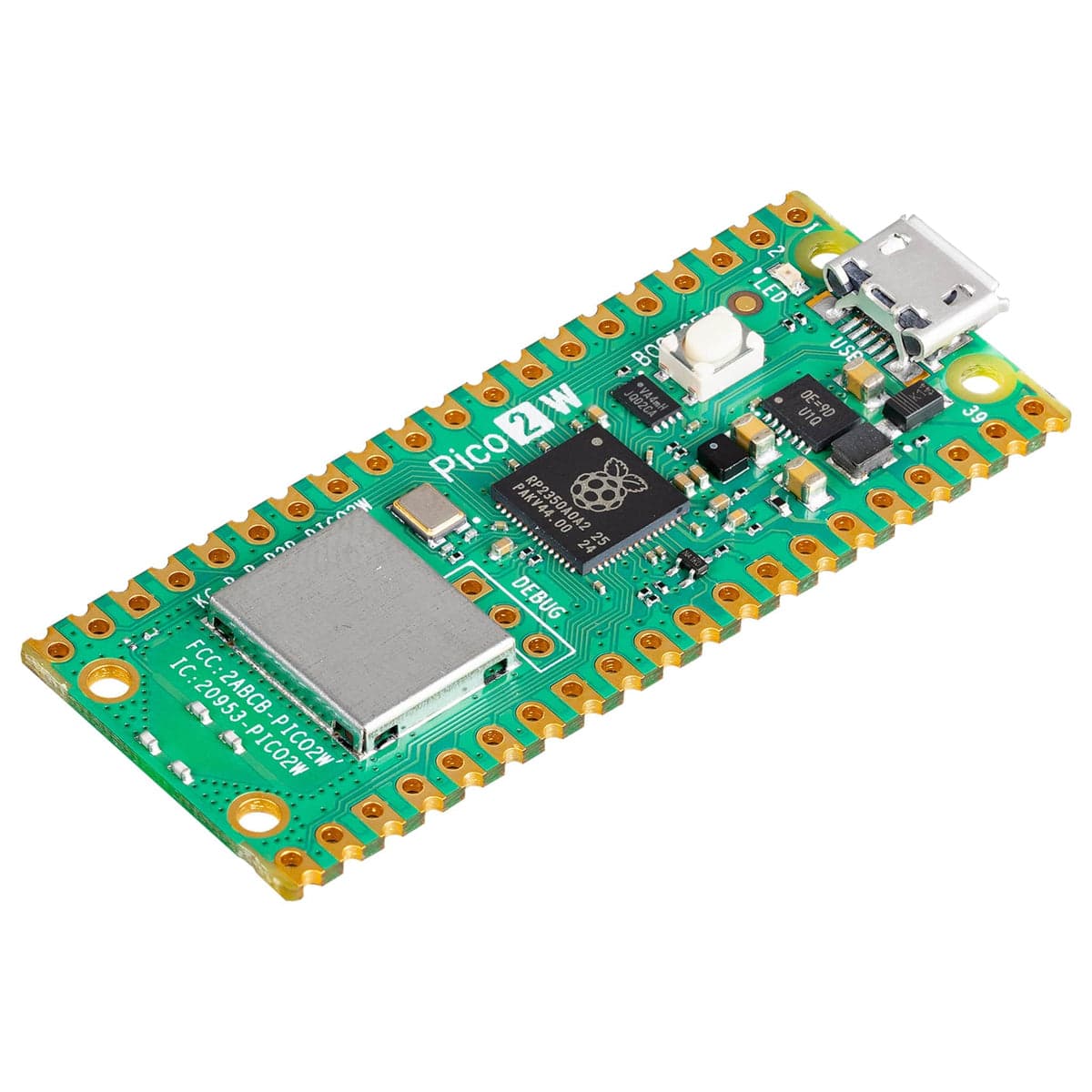
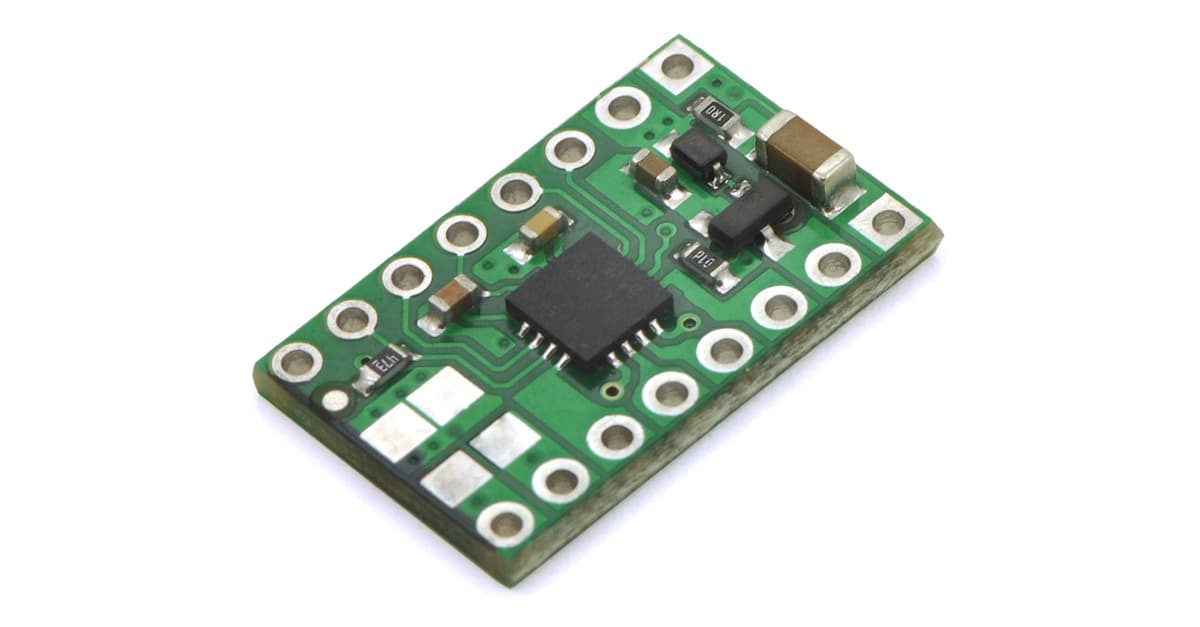
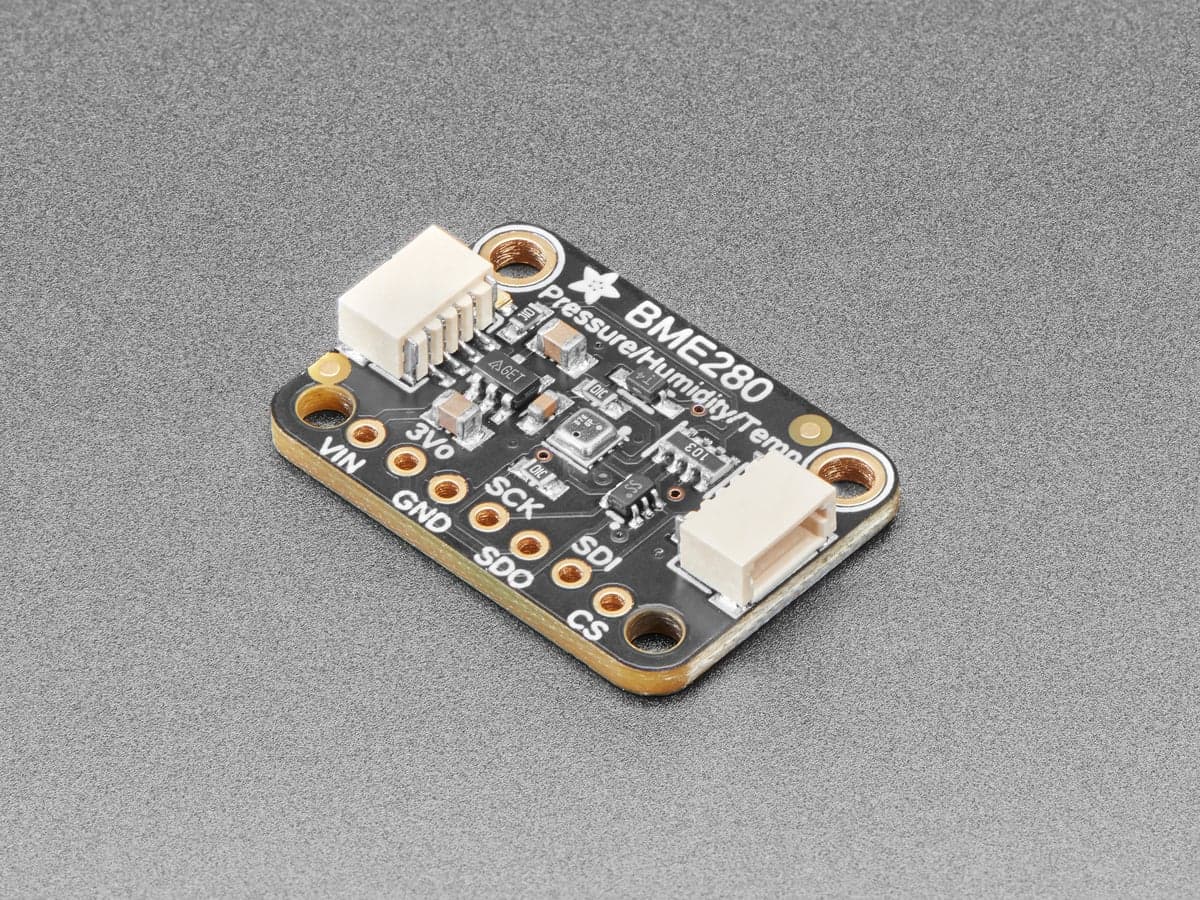
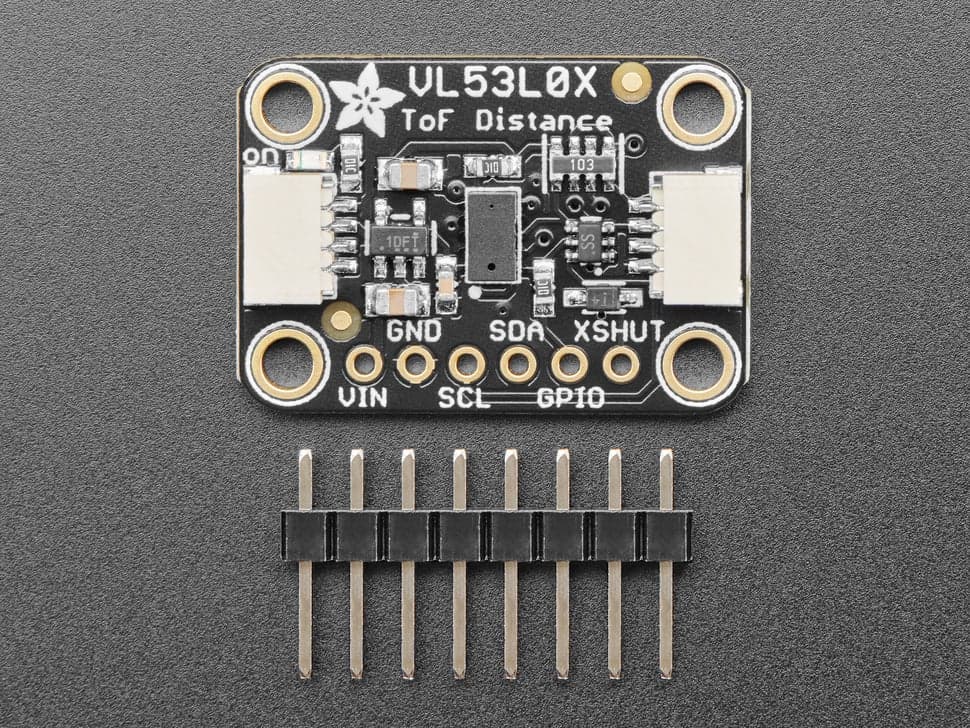
MCP · Streamable HTTP · no auth — paste the endpoint into Claude or ChatGPT and ask it to spec you a robot.
Prices are indicative, per the dated vendor listing on each record. Availability is never claimed.
What we actually own
Anyone can stand up an endpoint. The question is whether it can be trusted.
We are candid about which parts of this are commodity. The serving layer is being given away — that is precisely why the value sits somewhere else.
Commodity, and we say so
An MCP endpoint, agent-readable pages and a product feed. A tier-one manufacturer built their own in a fortnight, the CDNs are auto-generating them, and every PIM will ship them inside two years. Plumbing is not a moat, and a vendor who tells you it is has mistaken the pipe for the water.
The part that is hard
Turning forty-page datasheets, competing part records and half-documented variants into one verified answer an agent can be trusted with — and being able to prove the answer is right. That is three assets, and each one compounds with every catalog we ingest.
Parts Graph™
The assetOne canonical record per part, with every field typed to its ETIM class, versioned, and carrying a confidence score plus a link back to the exact page or datasheet page number it came from.
PROVENANCE ON EVERY FIELD · NOT A SCRAPE
Why it is hard to copy
The provenance chain is the work. Without it a manufacturer cannot put their name behind an agent's answer, and with it they can — which is the whole reason this is a product and not a script.
Resolution™
The engineMPN and variant entity resolution: suffix codes, packaging variants, superseded parts, cross-references and competitor equivalents, resolved into one identity an agent can follow.
SUFFIXES · PACKAGING · SUPERSESSIONS · CROSS-REFS
Why it is hard to copy
Two businesses were built on doing this well and neither sells it white-label to manufacturers. It cannot be shortcut, and it improves for every customer each time we ingest another catalog.
Ground Truth™
The proofA golden set of engineering questions per product family, run continuously against the major assistants and scored against your own datasheets. Wrong answers surface before your customers meet them.
CONTINUOUS EVALS · SCORED AGAINST YOUR SOURCE
Why it is hard to copy
It turns visibility from an opinion into a number you can take to a board. Nobody else sells accuracy as a measured service for product data, and it is what makes the second year worth buying.
The same model, answering the same 480 hardware questions, scored roughly twice as well when the facts arrived as structured data rather than as a PDF. Format, not model quality, is the accuracy variable — which is why the graph matters more than the pipe.
PCB-QA · 480 QUESTION-ANSWER PAIRS FROM REAL DESIGN FILES · ARXIV, JUNE 2026
Being readable gets you into the answer. Being verifiably right is what keeps you there — and it is the only part of this a competitor cannot ship in a fortnight.
The evidence
We graded nearly a thousand distributors and manufacturers. Not one scored an A.
Not a survey — we ran the grader against them across North America, Europe and Asia, and read the results. This is the competitive landscape as an AI assistant sees it today, and it is wide open.
0
distributor and manufacturer domains audited worldwide
0
scored D or F — effectively unreadable to AI agents
0
reached an A — the top of this market is unclaimed
0
median score out of 100
40%
could not serve a single readable catalog page to our probe — a block, a timeout, or a bot challenge. Several returned a success status while delivering nothing readable at all.
20%
publish an explicit AI-crawler policy naming the major bots. The rest leave it to a wildcard — and as edge defaults tighten, silence resolves to “no”.
0 / 984
publish an MCP discovery manifest at the conventional path. Almost none offer agents a sanctioned way to query parts, stock or specifications.
~55M
catalog URLs, estimated by scaling their sitemap indexes — an enormous body of product data, most of which agents cannot actually read.
We publish the aggregate, not a league table — these are respected businesses with excellent catalogs, and the point isn't that they got it wrong. It's that the agent channel is still unclaimed. The first manufacturer or distributor in a category to become readable becomes the answer.
Grade your catalogMethod: automated read-only probe of public surfaces, August 2026 · scores are a floor where sites blocked our client · point-in-time and subject to change
The proof
Machine numbers, not marketing numbers.
Partsgraph is infrastructure, and we hold it to infrastructure standards. We publish our engineering targets, speak the standards your industry already trusts, and run our own website agent-readable — because we'd be embarrassed not to.
0
typed parametric attributes per part, sourced and versioned
0.0%
extraction precision target on parametric tables — eval-gated before promotion
<0 ms
p95 tool-call latency budget at the edge
0
standards spoken natively, from ETIM to the EU Digital Product Passport
Onboarding takes days, not quarters: we connect your sources, build the graph, stand up your surfaces and hand you the accuracy dashboard. Implementation is a fixed one-off fee, so there is no open-ended consulting engagement attached to it.
Live in days
Pricing
Priced like the infrastructure it is.
A one-off implementation fee, then a subscription. SKU bands set the floor; agent queries served is the meter that grows as the market does.
Grader
£0
See what AI says about your products today — scored against your own datasheets.
- AI visibility score
- Catalog crawl & sampling
- Datasheet access check
- Peer benchmark
Free, right now
Starter
£400/mo
Your layer, generated from public data. Live in days, no IT ticket.
- Hosted agent-readable mirror
- Basic MCP endpoint
- JSON-LD + llms.txt
- Monthly accuracy report
Enquire — no public signup
There is no public self-serve app. Starter is not a signup — enquire via the form.
Recommended
Pro
£2,500/mo
+ £10,000 one-off implementation
Connected sources, the full Parts Graph, and continuous accuracy monitoring.
- PIM/ERP connectors
- Typed parametrics + cross-reference graph
- Golden-set evals across assistants
- Agent analytics + gap reports
- AI shopping feeds + ETIM xChange
Most catalogs land here
Scale
Custom
Implementation quoted to scope
Compliance packs, gated commercial data, and your own domain.
- EU DPP / AAS exports
- OAuth-gated price & stock
- agents.yourdomain CNAME
- SLA + SSO
Talk to us
Implementation is a one-off fee covering source connection, extraction, entity resolution and go-live — not an open-ended engagement. Subscriptions are metered on SKU band and agent queries served. Indicative pricing; local taxes excluded.
Straight answers
The questions a builder actually asks.
Isn't this just an MCP server?
The MCP endpoint is one of several surfaces we generate. The product is the canonical Parts Graph behind it — your datasheets, parametrics, alternates and compliance resolved into one verified source of truth, then served everywhere agents look and monitored for accuracy. Anyone can stand up an empty MCP server; the value is what it can truthfully answer.
Do we have to rewrite our website?
No. Partsgraph is an overlay. It reads from the systems you already run — PIM, ERP, your site, your PDFs — and serves alongside your website through hosted endpoints, an edge snippet, or a simple CNAME. Nothing on your critical path changes, so this is a marketing or digital decision, not an 18-month re-platform.
We already have a PIM. Isn't this the same thing?
Your PIM stores and syndicates product data to channels. Partsgraph makes that data answer questions — as a graph an agent can query, with entity resolution, cross-references, and continuous accuracy evals against what the assistants actually say. We connect to your PIM; we don't replace it.
Our datasheets are PDFs. Our specs live in tables.
That's the input, not a problem. Eval-gated extraction pulls typed parametrics out of PDF datasheets and drawings, resolves MPN variants, and every field carries a confidence score and a link back to its source. Low-confidence fields go to human review before they're ever served.
Will agents even find our endpoint?
Discovery is part of the service. We publish agent-readable pages and structured data that crawlers already read, register your endpoint in the assistant connector directories, and push product feeds to the shopping surfaces. You don't chase each new AI channel — we do, for every catalog at once.
Is agent traffic actually big enough to matter yet?
It's small today and compounding fast — but you're not only buying tomorrow's traffic. You're buying compliance you owe anyway (DPP, ETIM), visibility you can measure now, and first-mover position in becoming the cited source before the category's defaults harden. You position before the wave, not during it.
What about our distributors? We can't undercut the channel.
You control exactly what's exposed. Most manufacturers start with specs, compliance, CAD and cross-references — the design-win data — and keep price and stock gated behind OAuth, or route agents to authorised distributors. The agent channel is a demand-creation tool, not a bypass.
How is this different from an SEO or AI-visibility agency?
Agencies monitor what AI says and tweak copy. Partsgraph is infrastructure: it serves your actual product data to agents and proves the answers are correct. Monitoring tells you you're invisible; we make you readable — and keep you accurate.
Early access
When an AI specs the project, whose part gets in?
Tell us your domain and we audit your catalog first: what the assistants say about your products today, scored against your own datasheets. Then we quote implementation and turn on your layer.
Manufacturers & distributors worldwide · electrical · building products · electronics